
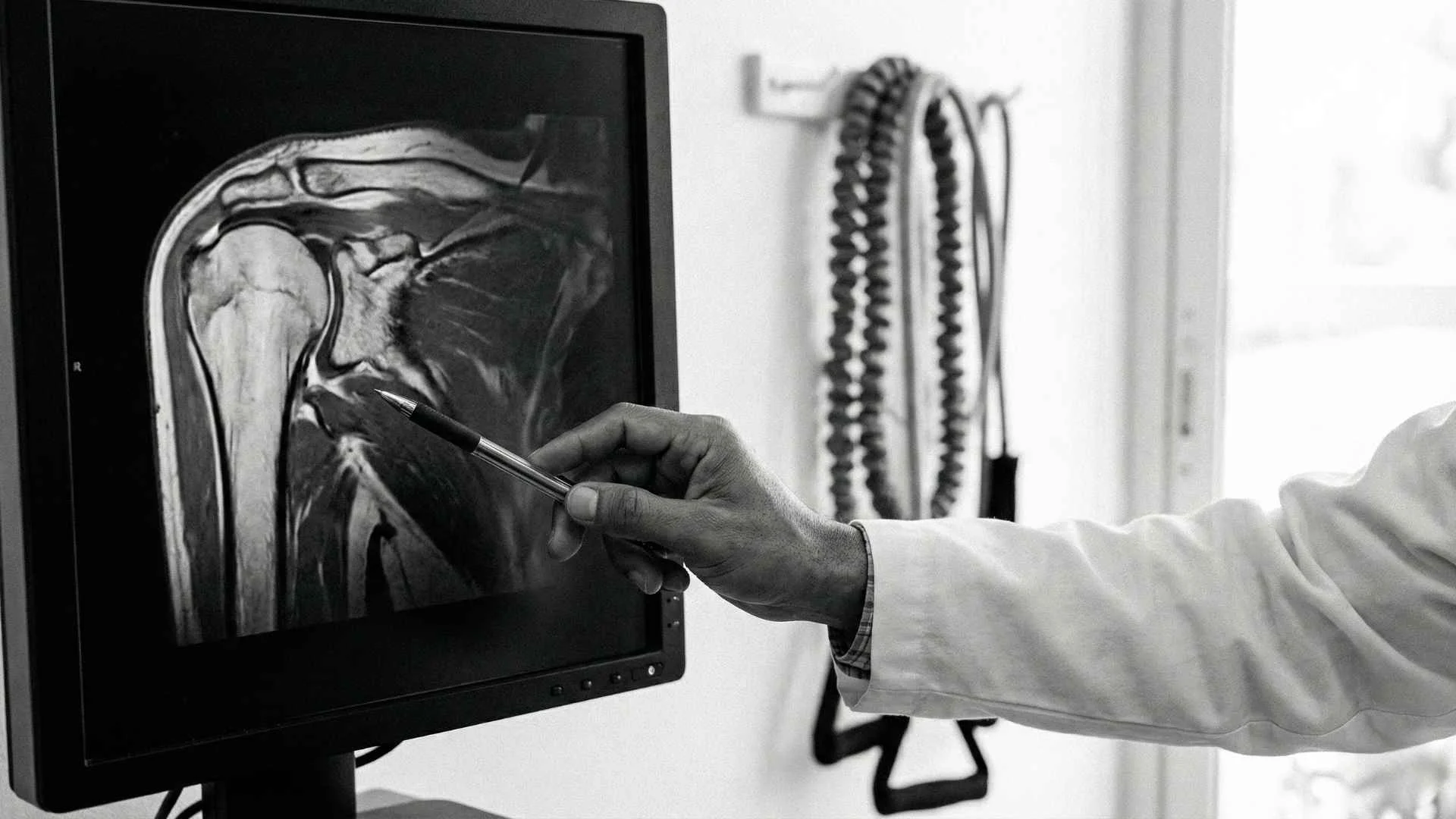
Shoulder arthroscopy allows the surgeon to examine and treat selected problems inside the joint and around the rotator cuff. It may be part of the treatment plan for tendon, labral, instability, or biceps-related injuries, but not every shoulder condition needs surgery, and not every procedure can be performed entirely arthroscopically.
The first step is to determine whether symptoms come from a structural injury, stiffness, overload, arthritis, instability, or even the cervical spine.
Symptoms that should be evaluated
An assessment may be appropriate when you have:
- Night pain that interrupts sleep.
- Difficulty raising the arm, getting dressed, or reaching overhead.
- Weakness that limits lifting or holding objects.
- A feeling of instability or a history of dislocation.
- Progressive loss of motion.
- Pain after a fall, pull, or sudden effort.
- Painful catching combined with loss of function.
- MRI findings involving the rotator cuff or labrum that need clinical interpretation.
What is reviewed before surgery is considered?
The evaluation brings together:
- Active and passive shoulder motion.
- Rotator cuff and deltoid strength.
- Stability and any history of dislocation.
- Neck, shoulder blade, and arm function.
- X-rays for bone structure, alignment, and arthritis.
- Ultrasound or MRI when tendon, labral, or other soft-tissue detail is needed.
- Previous treatment and response to rehabilitation.
Many shoulder conditions are first managed with activity changes, symptom control, and physical therapy. The type and duration of non-surgical care depend on the injury, functional limitation, and patient goals.
Problems that may be treated arthroscopically
Rotator cuff
Some tears may be repaired by securing the tendon back to bone. Tear size, retraction, tissue quality, symptoms, and activity demands influence the decision.
Labral injury and instability
After dislocations, labral repair may be considered. Bone loss and the instability pattern help determine whether arthroscopy is sufficient.
Biceps tendon
Treatment may involve repair, fixation in another location, or non-surgical care depending on the pain source and associated injuries.
Inflamed tissue and cartilage
Arthroscopy may remove inflamed tissue or treat selected lesions. A general “cleanup” should not be expected to solve every shoulder problem.
When another treatment route may be more appropriate
Arthroscopy may not be the best option when severe stiffness is present without a repairable lesion, advanced joint wear exists, substantial bone loss follows recurrent dislocations, symptoms come from the cervical spine, or imaging does not match the functional problem.
For advanced arthritis, the discussion may include other options, including shoulder replacement in selected cases.
Recovery depends on the repair
A limited removal procedure does not follow the same protocol as a rotator cuff repair or stabilization. Depending on the work performed, the arm may need protection in a sling, restrictions on active motion, and gradual rehabilitation.
Before surgery, the plan should clarify:
- How long the repaired tissue needs protection.
- Which movements are allowed and which must be avoided.
- When passive motion, active motion, and strengthening begin.
- Adjustments for sleep, dressing, work, and driving.
- Criteria for returning to lifting, swimming, throwing, or sports.
A rehabilitation phase should not be interpreted as a guaranteed recovery date.
Risks, limitations, and preparation
Potential risks include infection, stiffness, bleeding, blood clots, nerve or vessel injury, failure of tissue healing, persistent pain, recurrent instability, and the need for additional procedures. Anesthesia and pain-control plans are defined with the anesthesia team.
Bring available X-rays, ultrasound, or MRI, prior reports, treatments already tried, and information about falls, dislocations, or activities that trigger symptoms.
The confirmed consultation location is Hospital Punta Mita.
Frequently asked questions
Does every rotator cuff tear need surgery?
No. The decision depends on the type of tear, symptoms, function, progression, tissue quality, and response to non-surgical care.
How long will I need a sling?
It depends on what was done. Tendon or labral repair may require more protection than a procedure without repair. The protocol is procedure-specific.
When can I drive again?
You need adequate arm control, safe reaction ability, no medication that impairs driving, and clearance from the treating team. There is no universal date.
Will I be able to sleep flat after surgery?
Comfort varies. Temporary positioning or support recommendations depend on the procedure and should be individualized.