
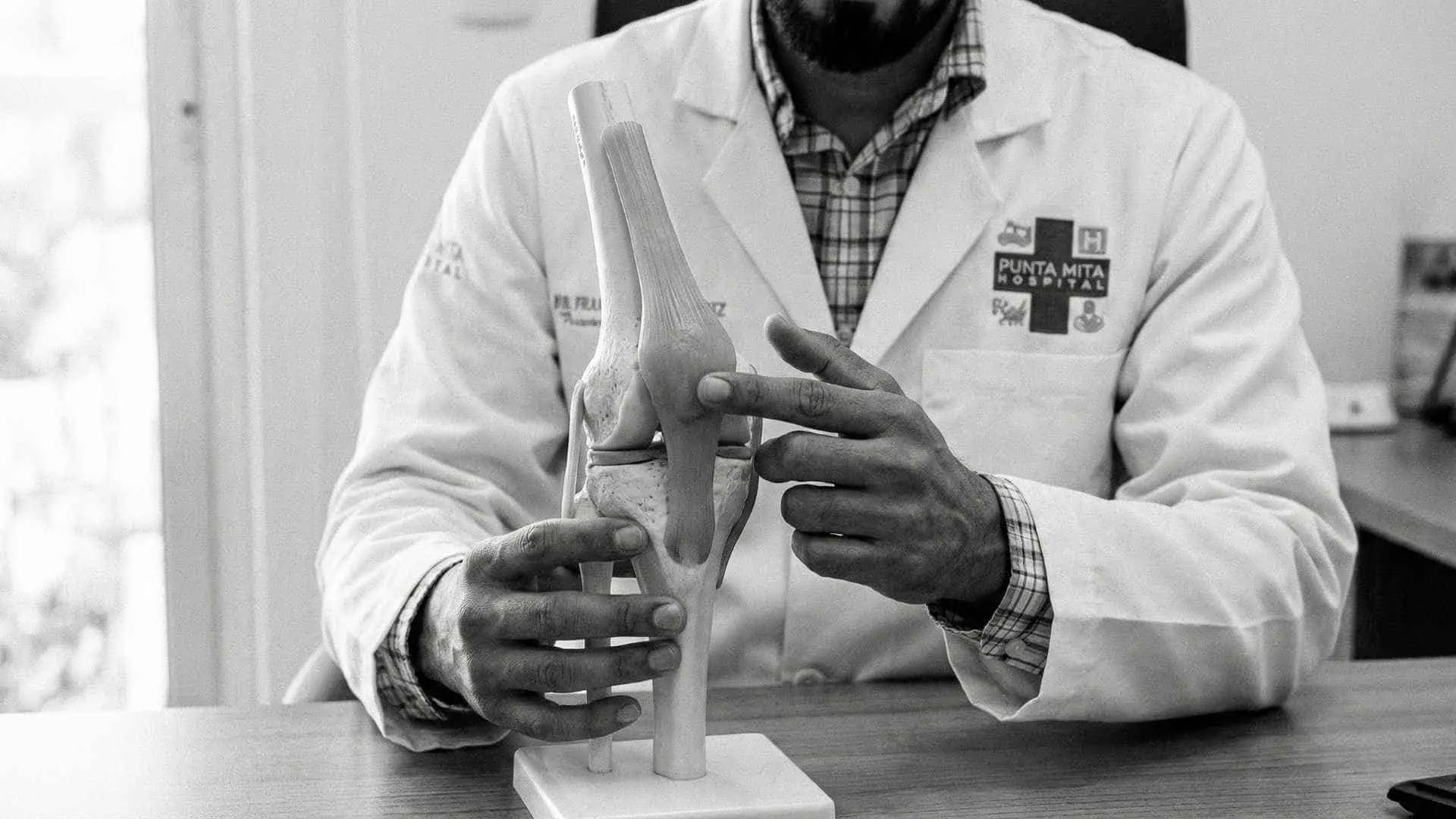
Arthroscopy uses a small camera to examine the inside of a joint and, in selected cases, perform a repair or remove tissue causing a mechanical problem. Small incisions do not mean the procedure is necessary for every painful joint, and recovery is not the same for every patient.
The decision should answer three questions first: which structure is involved, how much function is affected, and which alternatives have already been tried. MRI findings can be useful, but imaging alone does not determine whether someone needs surgery.
When may arthroscopy be considered?
An evaluation may be appropriate when symptoms or findings suggest a problem inside the joint:
- Locking, catching, or loss of motion.
- Instability after an injury.
- Pain that continues despite a reasonable non-surgical plan.
- Meniscus, ligament, tendon, labral, or cartilage injuries that need correlation with symptoms.
- Loose bodies or inflamed tissue inside the joint.
- A need for a second opinion before accepting a surgical recommendation.
When might it not be the right option?
Arthroscopy is not a general solution for every type of joint pain. It may not provide the expected benefit when pain mainly comes from structures outside the joint, advanced widespread arthritis is present, imaging does not match symptoms, or an appropriate non-surgical plan has not been completed.
The next step may instead involve non-surgical options, rehabilitation, additional imaging, or another treatment strategy.
Choose the joint you need evaluated
Knee
Locking, instability, meniscus or ligament injuries, cartilage damage, or loose bodies. Review knee arthroscopy.
Shoulder
Rotator cuff, labral, instability, or biceps-related problems. Review shoulder arthroscopy.
Ankle
Impingement, osteochondral injury, loose bodies, or persistent symptoms after a sprain. Review ankle arthroscopy.
Not sure which page applies
The evaluation can begin with symptoms, injury mechanism, and functional limits. You do not need to select a procedure on your own.
Cleanup, repair, and reconstruction are different procedures
Cleanup or selective removal
Removes an unstable fragment, loose body, or inflamed tissue. It may need less protection than a repair, but it does not guarantee immediate recovery.
Repair
Preserves and secures damaged tissue such as a meniscus, tendon, or labrum. Healing may require crutches, a sling, a boot, or movement restrictions.
Reconstruction
Rebuilds a structure that cannot be repaired directly, as in some ligament injuries. Rehabilitation is generally more extensive.
The access does not define the protocol
“Arthroscopy” describes the surgical route. Restrictions and recovery depend on the work performed inside the joint.
How is the next step decided?
The evaluation combines:
- Symptoms and limitations: pain location, failed movements, and effects on daily activity.
- Clinical examination: motion, stability, strength, and joint-specific tests.
- Available imaging: X-rays, MRI, or CT when they add useful information.
- Previous treatment: activity changes, medication, rehabilitation, bracing, or injections when relevant.
- Your goals: work, daily life, physical activity, and realistic recovery expectations.
Bring prior imaging, medical reports, and a list of treatments already tried. You do not need to order an MRI on your own before the first consultation.
Recovery depends on what is done inside the joint
Removing a loose body does not require the same protection as repairing a tendon or reconstructing a ligament. Before any procedure, the plan should clarify:
- Weight-bearing or movement restrictions.
- Possible use of crutches, a boot, or a sling.
- Rehabilitation goals and timing.
- Conditions for returning to driving, work, travel, or sports.
- Follow-up visits and symptoms that require medical review.
No individual return date should be assumed without knowing the exact procedure and clinical progress.
Risks, limitations, and logistics
Potential risks include infection, blood clots, stiffness, bleeding, injury to tissues or nerves, persistent symptoms, and the need for additional treatment. Individual risk varies by joint, procedure, medical history, and overall health.
The consultation compares the expected benefit with those risks and available alternatives. If surgery is proposed, the facility, anesthesia, materials, estimate, and hospital process must be confirmed before scheduling.
The confirmed consultation location is Hospital Punta Mita in Corral del Risco. Puerto Vallarta, Bahia de Banderas, and other Riviera Nayarit areas are patient origin markets, not additional confirmed offices.
Specific Treatments & Conditions
Ankle Arthroscopy in Punta de Mita
Evaluation of persistent ankle pain, catching, impingement, and osteochondral injuries to determine whether arthroscopy may help.
View TreatmentKnee Arthroscopy in Punta de Mita
Evaluation of locking, meniscus, ligament, and internal knee injuries to determine whether arthroscopy may be appropriate.
View TreatmentShoulder Arthroscopy in Punta de Mita
Evaluation of night pain, weakness, instability, and rotator cuff or labral injuries to define treatment options.
View TreatmentFrequently asked questions
Does an abnormal MRI mean I need arthroscopy?
No. The finding must match your symptoms and examination. Some changes appear on imaging without being the main cause of pain.
Can arthroscopy treat arthritis?
It depends on the pattern of damage and the goal of the procedure. Advanced, widespread joint wear may require alternatives other than arthroscopic cleanup.
Is arthroscopy always outpatient surgery?
Length of stay depends on the joint, procedure, anesthesia, medical history, and facility protocol. It must be confirmed for each case.
What type of anesthesia is used?
The anesthesia plan is defined with the surgical and anesthesia teams based on the joint, procedure, and individual medical factors.
Will insurance cover the procedure?
Coverage and administrative steps depend on the policy and authorization. Direct billing or a specific agreement should not be assumed without prior verification.