
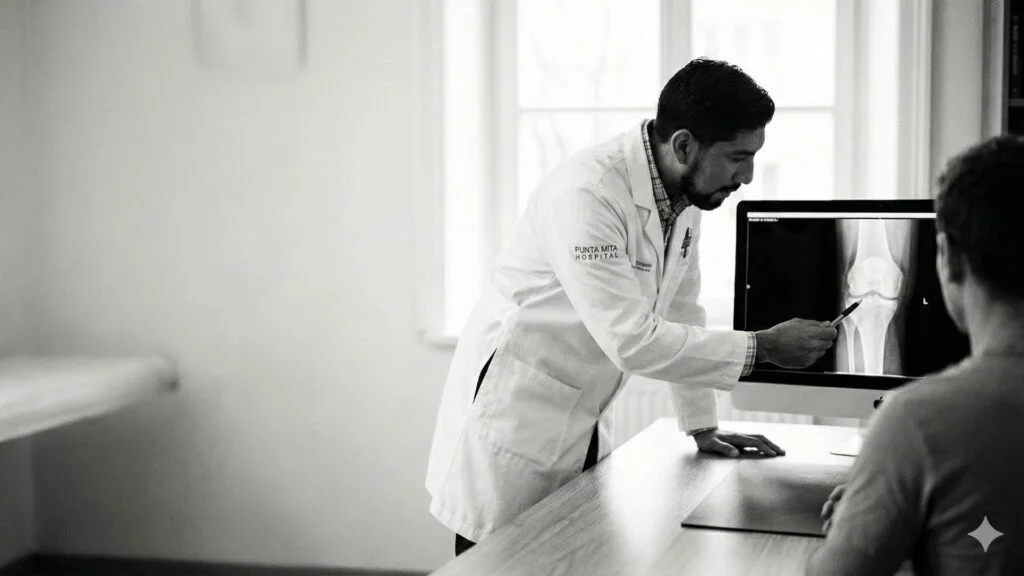
A herniated disc describes a structural change in one of the discs of the spine. Its presence on MRI does not automatically confirm the source of pain or determine treatment by itself.
What a herniated disc means
Discs sit between the vertebrae and contribute to movement and load distribution. Part of the disc material may move and, in some cases, irritate or compress a nearby nerve root.
Imaging finding without clear symptoms
A herniated disc may appear on MRI without matching the pain or producing neurological deficit. It should not be treated solely because it exists on the scan.
Localized pain
Pain may remain in the neck or lower back. This does not by itself confirm that the herniated disc is the responsible structure.
Radiating pain
When a nerve root is involved, pain, tingling or numbness may travel into an extremity.
Changes in strength or function
Weakness, loss of dexterity or gait changes require neurological examination and careful clinical correlation.
Lumbar or cervical herniation: the pattern changes
Lumbar herniated disc
It may be associated with pain from the lower back or buttock into the thigh, calf or foot, along with tingling, numbness or weakness. Also review the sciatica assessment page.
Cervical herniated disc
It may cause pain from the neck into the shoulder blade, shoulder, arm or hand, sometimes with sensory changes, weakness or loss of dexterity.
How symptoms and imaging are compared
The assessment reviews:
- Onset, location and radiation of pain.
- Tingling, numbness, weakness or loss of dexterity.
- Strength, sensation, reflexes, walking and mobility when relevant.
- Previous treatment and progress.
- Available MRI, X-rays or CT scans.
- Whether the level and side of the finding match the symptoms.
- Activity, medical history and functional needs.
Possible care pathways
Non-surgical care
Many cases may begin or continue with activity changes, rehabilitation and follow-up. This page does not prescribe individual medication or exercise programs.
Clinical follow-up
Changes in pain, strength, sensation and function help determine whether the current pathway remains appropriate.
Additional studies
They are considered when they may clarify a clinical mismatch or change the decision. Not every patient needs repeat imaging.
More advanced assessment
This may be discussed when neurological deficit, progression, significant persistent limitation or insufficient response to an initial pathway is present.
Microdiscectomy, spinal instrumentation, disc replacement and other procedures are not presented as confirmed services until the applicable clinical scope has been verified.
Second opinion before making a decision
A second opinion may be useful when:
- A procedure has already been proposed and you need to understand the indication.
- The MRI report sounds severe, but the symptoms do not match.
- Different professionals have provided different recommendations.
- Progress does not match expectations.
- You want to review benefits, limitations, alternatives and unresolved questions.
A second opinion does not guarantee a different recommendation; its purpose is to improve clarity around the decision.
Warning signs that require immediate medical care
What to bring, cost and location
Bring available imaging, reports, a medication list, previous treatments and a short description of symptom progression. There is no need to repeat an MRI solely because of this page.
Cost depends on the type of consultation, imaging review and follow-up needs. Insurance agreements, direct billing or coverage are not assumed.
Scheduled consultations take place at Hospital Punta Mita in Corral del Risco. For a broader review of neck or lower-back pain, see the spine assessment hub.
Frequently asked questions
Does every herniated disc require surgery?
No. Many people may continue with non-surgical care. The need for a surgical assessment depends on symptoms, examination, progress and whether those findings match the imaging.
Does a herniated disc on MRI confirm the source of pain?
Not necessarily. Some findings may exist without causing symptoms. Imaging should match the pain pattern, neurological changes and examination.
What is the difference between a lumbar and cervical herniated disc?
A lumbar herniation may be associated with pain, tingling or weakness into the leg. A cervical herniation may cause symptoms into the shoulder, arm or hand. The imaging level must match the clinical pattern.
What imaging should I bring?
Bring any available MRI, CT scan or X-rays with the reports. If no imaging is available, the assessment can determine which study may add value and avoid unnecessary repetition.
Can I request a second opinion before a procedure?
Yes. The consultation can review the recommendation, imaging, progress and applicable alternatives. A second opinion does not guarantee that the recommendation will change.
When should I seek urgent care?
Seek immediate care for new loss of bladder or bowel control, numbness in the genital or perineal area, marked or progressive weakness, sudden difficulty walking or severe pain after trauma.
Where does the consultation take place?
Scheduled consultations take place at Hospital Punta Mita in Corral del Risco. Patients from Riviera Nayarit, Banderas Bay and Puerto Vallarta are seen without presenting those areas as additional offices.