
Shoulder prosthesis in Punta de Mita
Specialized assessment for patients with pain, joint wear or significant shoulder limitation who need to know if a shoulder prosthesis is a reasonable option and what type of implant might be appropriate for them.
What is a shoulder prosthesis?
Shoulder prosthesis, also called shoulder replacement or shoulder joint replacement, is a surgery in which damaged joint surfaces are replaced with an implant to improve pain and function in selected cases. It is not indicated for just any shoulder pain. It usually comes into the conversation when there is significant joint damage, loss of mobility and difficulty with daily activities, and when other measures are no longer achieving the expected result.
For whom can this surgery be considered?
Shoulder replacement is usually assessed in patients with persistent pain and significant functional limitation, especially when there are already studies suggesting structural damage to the joint. It may come into consideration in scenarios such as:
- Arthrosis or severe wear and tear of the shoulder
- Arthritis that has deteriorated the joint
- Sequelae of shoulder fracture or trauma.
- Avascular necrosis of the humeral head.
- Joint damage associated with significant rotator cuff impairment, in selected cases.
Not all shoulder prostheses are the same
Anatomical prosthesis
It is usually considered when the joint is damaged, but favorable conditions still exist in the structures that help stabilize and move the shoulder.
Reverse or inverse prosthesis
It may come into consideration when, in addition to joint wear and tear, there is significant rotator cuff damage or other complex conditions that change the way the shoulder can regain motion.
Partial replacement
Reserved for selected scenarios. It does not apply to all patients and is decided according to clinical findings and studies.
Do you identify with any of these situations?
Shoulder pain limits your ability to sleep, dress or lift your arm.
You can no longer reach objects normally or you have lost strength and mobility.
You have a previous diagnosis of wear and tear, arthritis or complex shoulder injury.
Have you already been talked about surgery or do you want a specialized assessment before deciding.
What you get in the valuation
What you do take away:
- Clinical examination focused on the shoulder.
- Review of previous studies.
- Clarity as to whether the problem corresponds to shoulder joint replacement or another route.
- A plan of next steps: studies, preparation and logistics.
How we define if you are a candidate
The decision does not depend only on pain or on an X-ray alone. In the assessment we analyze as a whole:
Symptoms and degree of limitation.
Shoulder mobility and strength.
Joint status.
Rotator cuff condition.
Bone quality.
Relevant history for surgical planning.
Your recovery, in phases
Contact and pre-evaluation: We start with a message to get to know your case and tell you what studies you should bring.
Consultation and diagnosis: We evaluate the shoulder, review your studies and determine if the problem corresponds to a joint replacement scenario.
Definition of the plan: We explain what type of prosthesis might be appropriate, what preparation is needed and what the surgical path would be like.
Scheduling and logistics: If the case proceeds to surgery, we coordinate dates, hospital requirements and administrative process.
Follow-up and recovery: We follow up the clinical evolution and the rehabilitation indicated to recover function progressively.
What studies are usually reviewed and what to prepare
If you already have studies, bring them to the consultation. This speeds up the clinical decision and helps to better guide the assessment. We frequently review X-rays of the shoulder, MRI if tendons and soft tissues need to be assessed, or CT scan when it is necessary to better understand the bony anatomy and plan the procedure. If you do not have previous studies, we will define in consultation which ones are more useful in your case.
What to bring to the consultation (ideal):
- X-rays, MRI or CT scans, if you already have them.
- List of medications
- Relevant background
- Specific doubts about pain, mobility, type of surgery or time of the process.
What studies are usually reviewed and what to prepare
Recovery depends on the type of prosthesis, your initial condition and rehabilitation plan. In general, there is an initial phase of shoulder protection, followed by progressive recovery of mobility and function. From the assessment, it is explained to you what to expect in practical terms and what steps are usually part of the follow-up.
Costs, insurance and payment options
Financial Transparency
Shoulder replacement surgery is a highly specialized procedure. The budget is customized according to the diagnosis, the type of implant and the hospital site. For private patients, we provide a clear proposal of the process and budget. If you have medical insurance, we guide you through the medical documentation and administrative process.
Location and logistics
Attention in Punta de Mita (Riviera Nayarit).
Frequently Asked Questions
Are shoulder prosthesis and arthroscopy the same thing?
No. They are different procedures and are indicated in different scenarios. Arthroscopy does not replace a damaged joint; prosthesis is part of joint replacement.
Who is a candidate for shoulder replacement?
It is assessed by pain, functional limitation, physical examination and imaging studies. It is not decided by age alone.
What is the difference between an anatomical and a reverse prosthesis?
They do not perform exactly the same function nor are they used in the same cases. The choice depends on the joint, the condition of the rotator cuff and other clinical findings.
How long does recovery take?
It depends on the exact procedure and rehabilitation plan. It is defined by phases and functional milestones.
What studies do I need for a surgical evaluation?
If you already have X-rays, resonance or tomography, bring them with you. If not, in consultation we will define which studies are more appropriate for your case.
How is cost defined?
It depends on the diagnosis, the type of implant, the complexity of the procedure and the hospital location. It is quoted after evaluation with studies.
Do you serve international patients?
Yes, assessment, review of studies and logistics of care can be coordinated on a case-by-case basis.
See: /patients-international/
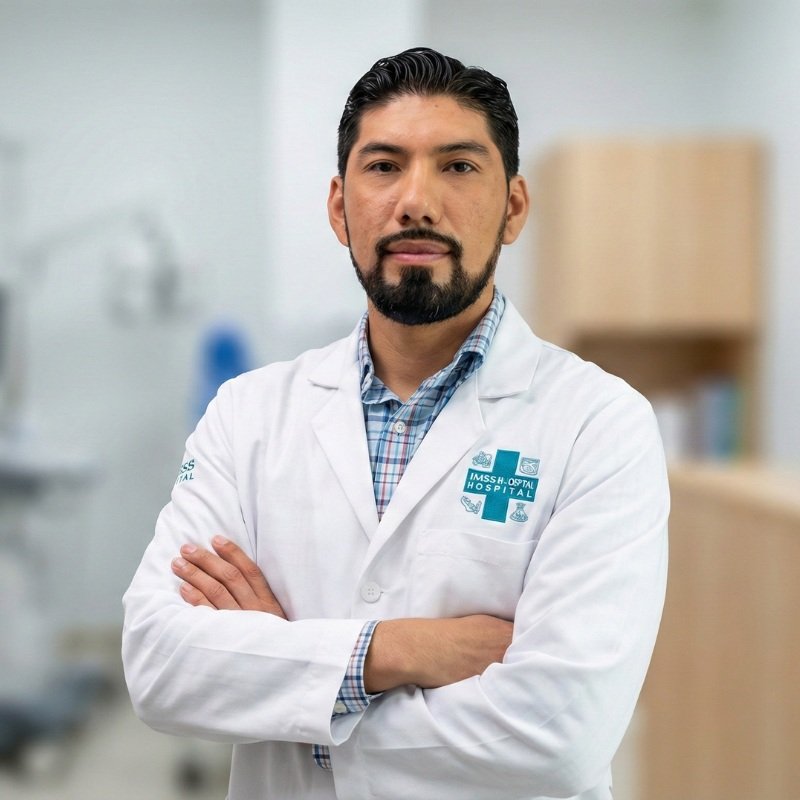
Dr. Francisco Rafael Hernández Pérez
Specialist in Orthopedics and Traumatology
- Prof. Card 8042876
- Cédula Esp. 10625160
- Punta Mita Hospital, Nayarit
Read reviews on Google
Do you have specific questions?
Dr. Francisco Rafael Hernández Pérez
Specialist in Orthopedics and Traumatology
- Prof. Card 8042876
- Cédula Esp. 10625160
- Punta Mita Hospital, Nayarit
Read reviews on Google